
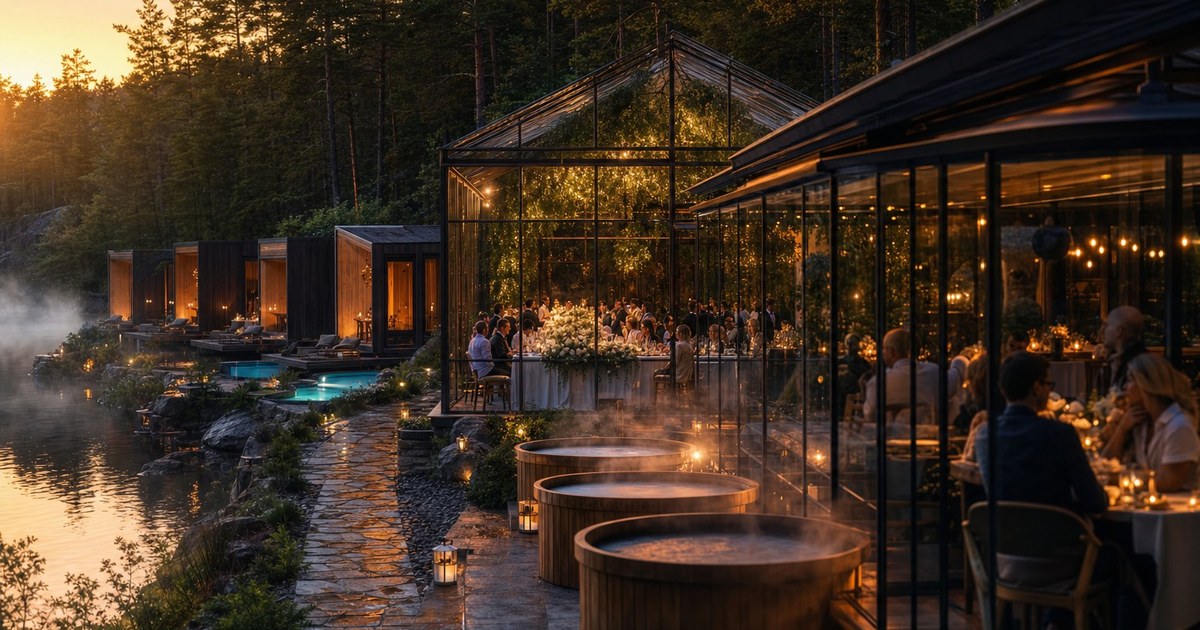
What frameless glazing is
It is a technique in which glass panels are fixed to a minimal frame (only at the top and bottom), with no mullions between the panels — the glass is joined directly using a clear sealant or Y-profile.
Design principles
- Glass thickness — minimum 10 mm tempered or 8+8 laminated
- Panel height — up to 3.5 m without intermediate support
- Width of a single panel — 600–1,200 mm
- Joints are filled with clear silicone or a Y-profile
Advantages
- Maximum daylight — no vertical mullions blocking the light
- Clean design — the glass appears almost invisible
- Maximum views — panoramic sightlines without frames
- Premium aesthetics — the standard for the luxury segment
Limitations and drawbacks
- 40–80% more expensive than framed systems
- More complex to install — requires a specialized crew
- Cannot be used for very large spans (more than 4–5 m without intermediate mullions)
- Sensitive to structural movement — a high-quality foundation is essential
- For residential spaces, additional soundproofing is required
Price of frameless glazing
Price per 1 m² of frameless glazing with tempered insulated glass units:
- Cold frameless (without thermal break): RUB 18,000–25,000/m²
- Warm frameless with double-chamber IGU: RUB 32,000–45,000/m²
- Warm with triple IGU and thermal break: RUB 55,000–75,000/m²
- Sliding frameless (parking systems): RUB 75,000–120,000/m²
Where it is used most often
Premium country houses, restaurants and cafés with open terraces, car dealership showrooms, hotel lobbies, spa complexes, and exhibition pavilions.