
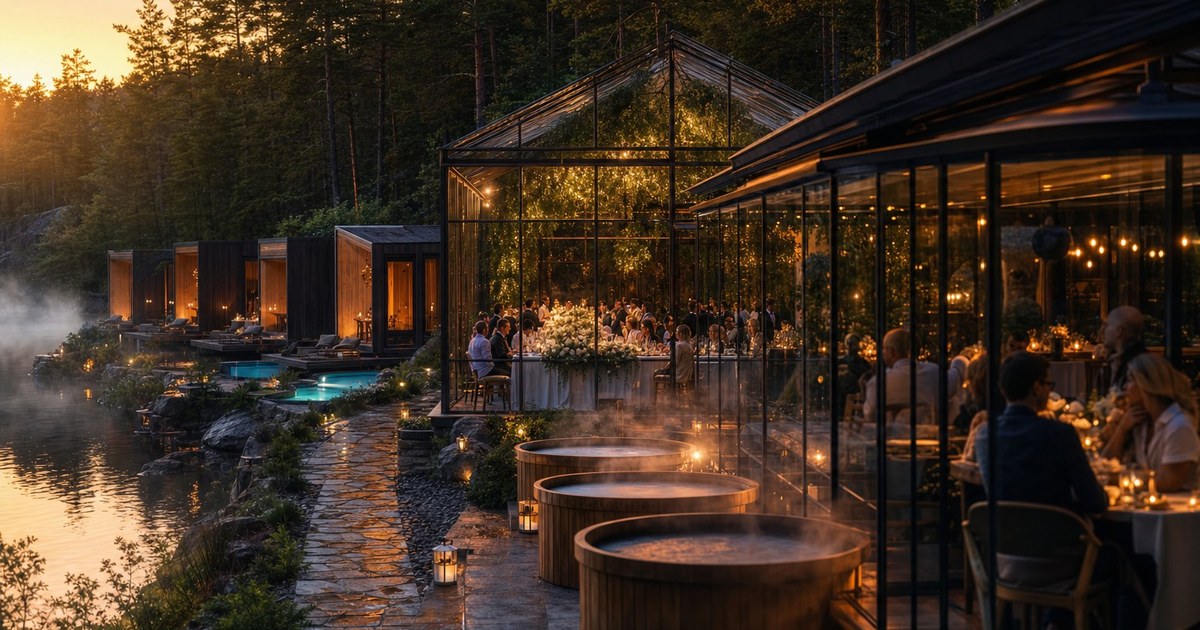
1. Structure type — sliding or fixed
Sliding pavilions let you slide the walls aside in summer, opening the space to the yard. They suit the warm season and regions with mild winters. The price is 30–40% higher due to the sliding mechanism.
Fixed pavilions work year-round, offer better thermal insulation, and are easier to maintain. For Moscow and the Moscow Region, most clients choose fixed pavilions or a combination of the two.
2. Glass thickness
- 8 mm tempered — the minimum for a pavilion up to 20 m², sufficient for spring–summer use
- 10 mm tempered — the standard for all-season pavilions up to 40 m²
- 10+10 mm laminated — mandatory for commercial pavilions and large spans
- Double-chamber IGU — mandatory for year-round use; saves 35–45% on heating
3. Frame type
Aluminum with a thermal break is the standard. Stainless steel is the premium option, allowing wider spans and slimmer posts. Matte black aluminum suits contemporary minimalist design.
4. Insulation and climate control
For year-round use in the Moscow Region, the following are essential: underfloor heating (electric or hydronic), ventilation with heat recovery, and air conditioning. Optional: an automatic shading system for south-facing façades in summer.
5. Safety and certification
The manufacturer should hold certificates for tempered glass (GOST R 54171-2010), fire safety certificates for the materials used, and provide a minimum 3-year warranty on the structure.
6. Logistics and installation
Delivery of oversized IGUs to Moscow and the Moscow Region takes 3–7 days. Installation of a standard 30 m² pavilion takes 2–4 days with a 3-person crew. Check whether installation is included in the price or billed separately.
7. Cost of ownership
Annual maintenance: exterior glass cleaning (RUB 5,000–15,000), inspection of seals, and hardware adjustment. Seal replacement is needed every 5–7 years, at around RUB 30,000 for a 30 m² pavilion.